
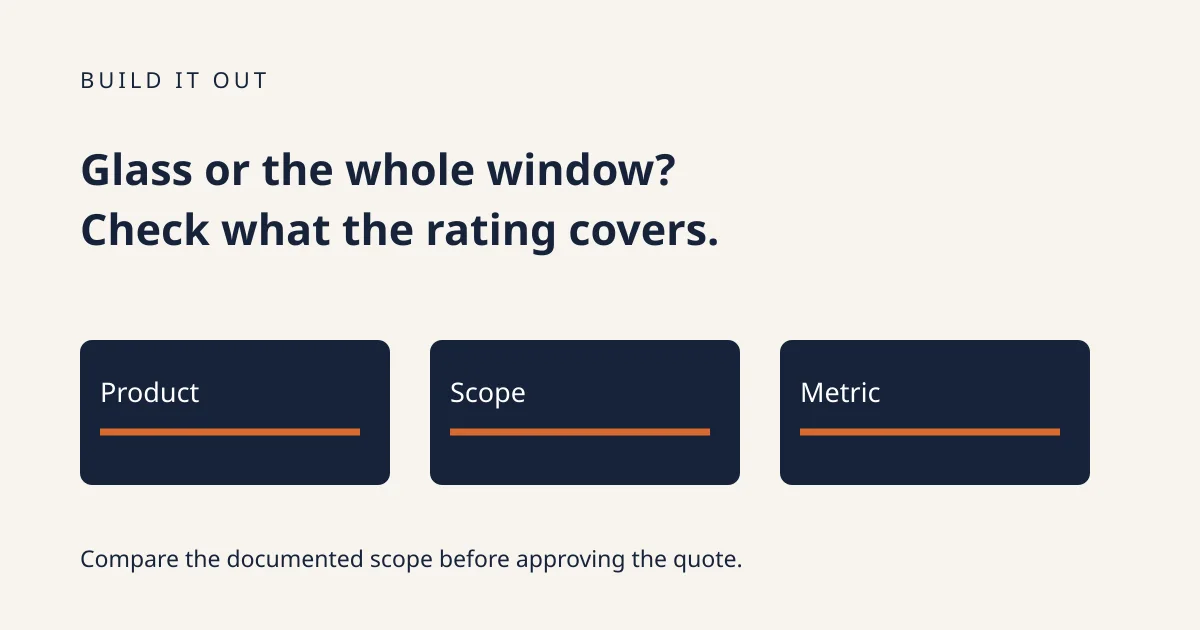
Check the scope beside the number before comparing window ratings. A center-of-glass U-factor describes the glazing; a whole-window rating also accounts for the rest of the assembly. Ask for the NFRC-certified whole-product information for the quoted configuration, with units, rather than ranking two unexplained numbers.
The quote says “high-performance glass” and a brochure shows an impressive U-factor. The competing quote shows a different number on an NFRC label. Neither number should be dismissed, but they may describe different things. First establish what each one measures.
Glass performance and product performance answer different questions
DOE’s window-selection manual distinguishes whole-window U-factor from center-of-glass performance. Cardinal’s glossary explains that glass-unit figures are useful for comparing glazing materials and coatings, but do not describe the entire window. The label’s scope is therefore part of the evidence, not a minor footnote.
Vitro’s explanation describes how component information feeds a whole-product calculation under defined conditions. That does not give a homeowner a conversion from a glass-only value to a complete-window value. Do not add an assumed frame penalty or substitute a value from another model.
Use three checks before comparing the quote
| Check | Record | If missing |
|---|---|---|
| Product identity | Manufacturer, series, operating style and quoted glass configuration | Ask which specific product the rating describes |
| Rating scope | Whole product or center of glass; certification or source document | Keep the numbers in separate columns |
| Metric and units | U-factor, SHGC or another named measure, with units where applicable | Do not rank unlabeled figures |
Andersen’s comparison advice explicitly calls for whole-unit values across manufacturers. Marvin’s architectural manual, product-performance page 33 dated January 19, 2024, likewise states that NFRC U-factor, SHGC and VT represent the whole window. Those statements explain the comparison method; their general examples are not the rating for the unit on this quote.
A certified rating still has a defined context
NFRC describes a process using simulations, validating tests and certification, followed by directory listing and labeling. This is not a claim that each window delivered to a home was individually tested in a chamber. Pella’s performance information notes the fixed conditions and specific product size used for NFRC ratings and distinguishes these ratings from design-pressure and performance-grade information.
Ask the supplier for the applicable certified product identifier or label information and a written link to the chosen configuration. Record operating style, glass option and other relevant options with the order. MILGARD’s U-factor explanation identifies the assembly and configuration effects; its local code figures are a separate question and are not a national selection rule.
Do not make one rating answer every question
According to ENERGY STAR’s rating explanation, lower U-factor indicates less heat transfer, while lower SHGC means less admitted solar heat; visible transmittance describes light transmission. These are distinct measures. Which combination suits the project also depends on its climate and design. A glass-only U-factor cannot settle daylight, condensation, installation quality or all comfort questions.
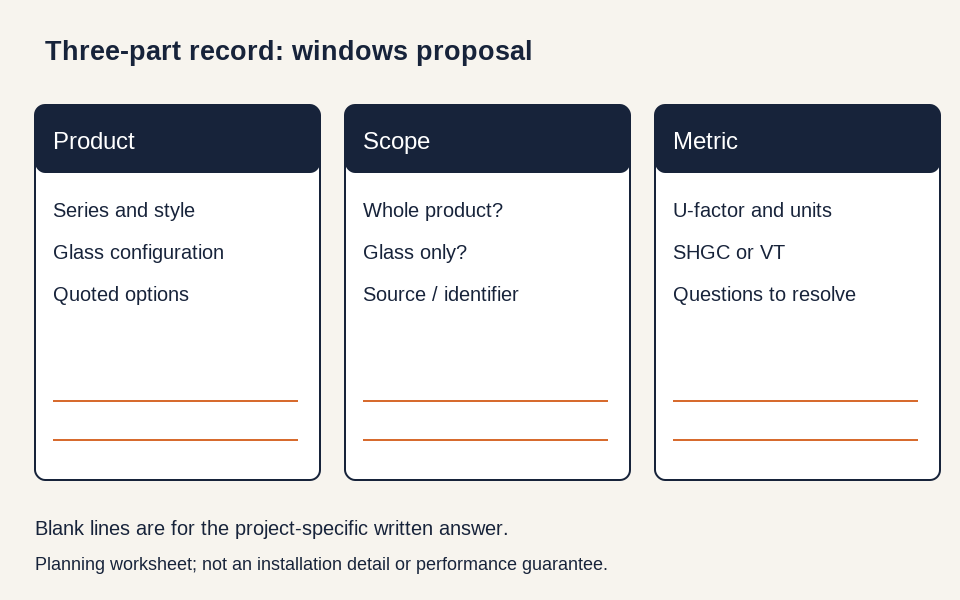
Use this seven-field record: room/opening; exact product; operating style; glass configuration; rating metric and units; whole-product or glass-only scope; matching source/identifier and outstanding questions. Retain the label or supplier documentation with the final order. Ask the installer to identify the installation work separately from the factory-rated product.
A comparison that should stay unresolved
In an illustrative comparison, Quote A supplies a center-of-glass U-factor and Quote B supplies a whole-product U-factor. The next action is to obtain Quote A’s whole-product information, not to declare the smaller number the winner. If either quote changes glass configuration during negotiation, request the corresponding rating before signing off.
The historical Houzz discussion about replacement-window ratings shows shoppers comparing brochure numbers while replies debate center-of-glass and whole-unit scope. It is evidence of confusion, not a current product test. Our window-dimension guide addresses a separate scope check: which physical size the quote describes.
Sources
These references inform the comparison and planning questions. Product-specific documents do not approve a different product or a particular home.
- Energy-Efficient Window Performance and Selection
- Residential Product Certification
- Energy-efficient windows: how to pick them based on climate
- Independently Tested and Certified Energy Performance
- U-factor definition
- Understanding Framing and Performance Values
- Performance Information
- What Are Title24Windows? — U-factor explanation
- Architectural Detail Manual: Ultimate Product Performance
- Windows w/U-rating less than .30 — homeowner discussion; question evidence only.