

Cement-based shower grout can look darker when wet without proving a leak. A dark area that persists, spreads, or accompanies water damage deserves assessment. Color alone cannot distinguish moisture, surface residue, a changed finish or a problem within the shower assembly. Record the pattern and exact products before choosing a sealer or repair.
Freshly installed gray grout looks even before a shower, then several joints become nearly charcoal. Some return to their earlier shade; one corner stays dark. The tempting response is either “all grout does that” or “the waterproofing has failed.” Neither conclusion follows from one photo. The useful question is what changed, where it changed and whether other evidence of water trouble is present.
Why wet cement grout can change shade
CUSTOM’s TB 17 explains that Portland-cement grout can darken when wet and stay dark until water drains or evaporates. The bulletin also distinguishes discoloration left by contaminants and conditions that prevent proper drying. It does not assign one universal drying deadline.
This explanation applies to the material described, not every product called grout. Ask for the manufacturer, full product name and color from the packaging or installation invoice. “Gray grout” and “sanded grout” are not complete product identities.
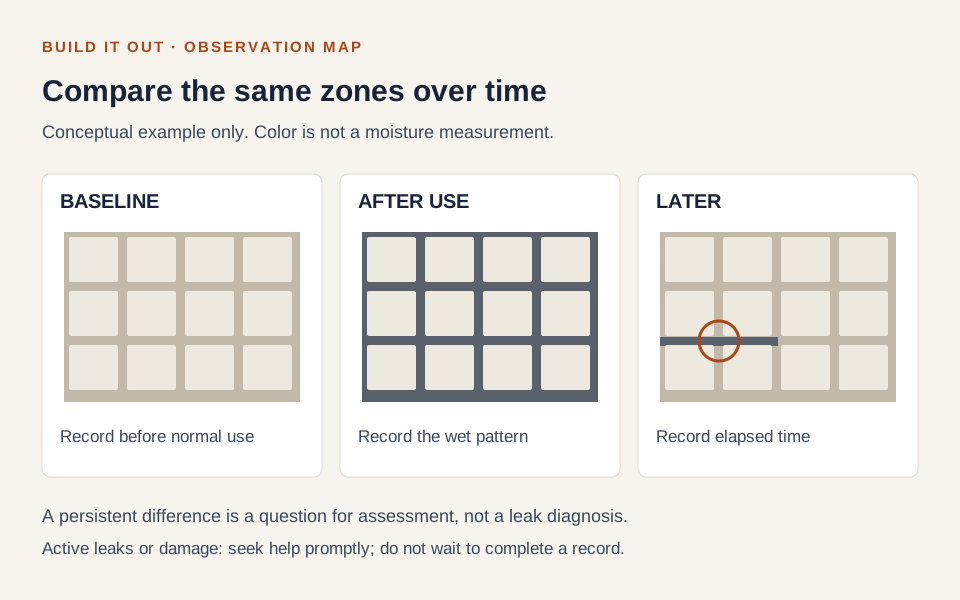
Our same-zone comparison record
Observe during ordinary use only. Do not flood the shower, block the drain, soak a questionable joint or keep using a suspected leak to create a clearer photograph. If water is appearing outside the enclosure or damage is developing, seek help promptly instead of waiting for a comparison.
| Field | What to record | Why it matters |
|---|---|---|
| Location | Identify the same wall joint, corner or floor zone in each photo | A whole-room photo can hide a localized change |
| Baseline | Appearance before normal use and time since the previous shower | “Dry-looking” is not proof of dryness below the tile |
| After use | Where direct spray or standing surface water was visible | Separates exposure pattern from an unexplained location |
| Later | Actual elapsed time and which zones changed back | Preserves sequence without inventing a pass/fail time |
| Other signs | New staining outside the enclosure, dripping, visible cracks or loose material | Information that can change the urgency of assessment |
Keep lighting and camera position similar where practical. Phone exposure and a shadow can exaggerate differences. Leave uncertain entries marked “not known”; a useful record does not require identifying a hidden construction layer.
Dark-looking does not always mean currently wet
TCNA’s color-variation FAQ describes several causes of uneven grout and the limits of judging the cause by appearance. Persistent dark color can justify a question without proving which of those explanations applies.
LATICRETE’s cement-grout FAQ even describes an enhancer intended to preserve a wet-looking appearance. That is a reason to record any sealer, enhancer, colorant or cleaner already used. It is not a recommendation to apply one to this problem. Changing the finish before assessment can make the original comparison harder.
Water resistance is a product property, not a diagnosis
TEC’s Power Grout data sheet reports a typical 1.1% water-absorption result after 28 days in its specified laboratory test. That figure describes a named material under a test method. It is not zero absorption, a homeowner leak test or a prediction of how many hours a shower joint should look dark.
ARDEX’s FG-C data sheet specifies that this particular grout needs no sealer. TEC and Bostik also identify products that do not require sealing. Therefore, darkening alone does not establish that the installer omitted a required sealer. Confirm the exact product before making that claim.
For a new installation, also distinguish curing from drying after normal use. Bostik’s TruColor working-properties table separates foot-traffic readiness from permitted intermittent water exposure under stated conditions. Record the installation date and first shower date, then ask the manufacturer or installer whether that product’s cure requirements were met. Do not borrow another grout’s timing.
The grout surface cannot certify the shower assembly
Schluter’s technical explanation separates the tile layer from the shower’s underlying water-management system. A visible joint is only one part of the assembly. Regrouting or adding a surface treatment should not be assumed to correct an unidentified waterproofing or drainage problem.
The material names matter beneath the tile too. USG describes its Durock cement board as water durable, rather than waterproof. By contrast, James Hardie describes a waterproof Backer PRO assembly with specified companion components and installation conditions. A generic note saying “cement board” does not tell a professional which complete system was installed or whether it was executed correctly.
Ask for the construction records, system name and any commissioning or water-test documentation that already exists. This is a document request, not an instruction to conduct a flood test on a finished shower or open the wall.
When to move beyond observation
Seek prompt professional assessment for water escaping the enclosure, staining on a ceiling below or adjoining wall, a changing damaged area, or persistent unexplained moisture. Stop using the affected shower if a leak or unsafe condition is suspected and obtain advice on the appropriate next step.
EPA advises investigating wet spots and hidden leaks with qualified help. Do not cover an unresolved water problem with paint, colorant or cosmetic grout work. Dark color alone also cannot identify mold; this article provides no mold-cleanup or concealed-damage repair procedure.
A focused message for the contractor
Send the same-zone photos, elapsed times, product names, treatment history and any signs outside the shower. Ask which explanations fit the evidence, what inspection is needed, and what a proposed repair would actually correct. Request a distinction between a cosmetic color issue, product maintenance and a water-management defect before agreeing to work.
If all you have is a momentary change after spray, the record prevents an unsupported failure claim. If the pattern persists or other damage appears, it gives the professional something clearer than “the grout looks wet.”
Sources and methodology
Manufacturer documents and original technical guidance informed this article. Product examples describe the named model, not every system. Sources checked October 25, 2026. The worksheet is our editorial synthesis; it is not a professional inspection.
- CUSTOM Building Products — TB 17: Darkening of grout joints in wet areas, June 2013
- Tile Council of North America — Color variation frequently asked questions
- LATICRETE — Cement-grout troubleshooting frequently asked questions
- ARDEX Americas — FG-C MICROTEC technical data, pp.2–3
- Bostik US — TruColor with EzClean technical data, August 8, 2025, pp.1–2
- TEC Specialty Products — Power Grout 550 product data, August 2026, pp.1–2
- Schluter Systems — Essential water management in tiled showers, Sean Gerolimatos
- USG — Should Durock cement board be waterproofed in wet-area use?
- James Hardie — Hardie Backer PRO waterproof cement board
- US EPA — Text version of the mold house tour