
Composite decking can become hot in direct sunlight, including products sold with heat-reducing technology. Before choosing a board, compare the exact color, exposure and test conditions behind the claim. A cooler result against one comparison board is not a promise that a finished deck will feel comfortable in every US summer.
This guide is about material selection and useful questions for a supplier. We have not conducted a temperature or barefoot-comfort test, and we do not rank brands from unrelated marketing results.
“Cooler” needs a complete comparison
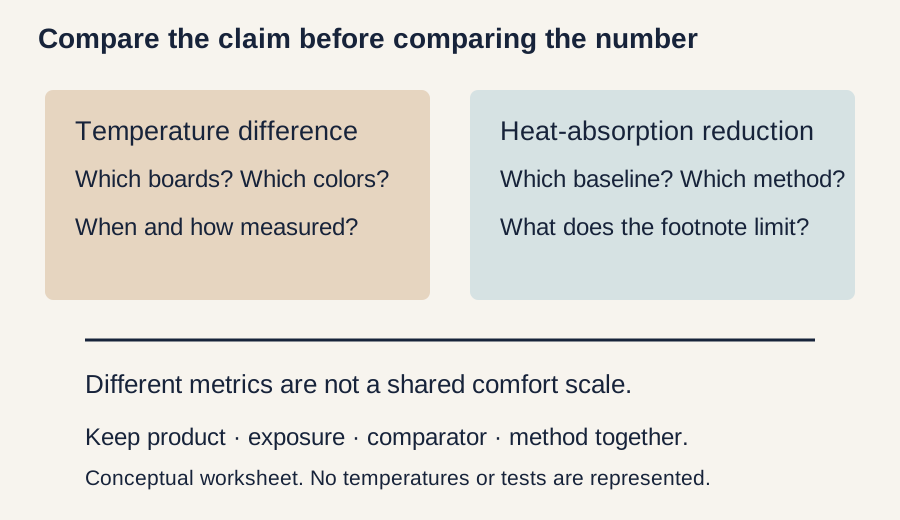
A useful comparison identifies what was tested, what it was compared with, and under which conditions. Trex's heat-technology page, for example, identifies particular colors in a laboratory comparison and says actual reduction varies with conditions, color and usage. MoistureShield's current page qualifies its comparator by board brightness. Those details matter as much as the headline. Trex's test footnotes; MoistureShield's comparator footnote.
Also check the metric. A reduction in heat absorption is not automatically the same quantity as a stated temperature difference. A temperature difference measured at a specified time is not a promise about how quickly two boards heat or cool through an afternoon. Keep the original wording and units in your comparison instead of converting unlike claims into a single ranking.
Choose the color in the context of the actual deck
TimberTech's technical installation guide says all decking products get hot in the sun and that darker colors feel hotter. Armadillo's sunny-backyard guidance likewise connects color selection with sun exposure. A light and a dark sample from the same collection are therefore useful items to discuss before narrowing the choice to a material name. TimberTech's color-and-temperature section; Armadillo's color guidance.
Write down when the planned deck is used and which parts receive direct sun then. A covered seating area and an uncovered route to a pool do not present the same decision. A photograph of a sample indoors does not show its installed solar exposure. Discuss shade as a design feature with the installer instead of assuming the board choice will solve all afternoon discomfort.
Broad brand comparisons also need restraint. NewTechWood's discussion emphasizes color and makes general material comparisons; Ecodek's FAQ describes sun heating in a UK context. Neither is a universal prediction for the temperature of a particular US deck. We use their guidance to identify questions, not to claim that every composite is cooler than every wood board. NewTechWood's discussion; Ecodek's FAQ.
Why an impressive heat-test image may not settle the purchase
Ekodeck publishes an Australian outdoor comparison with a test frame, hourly measurements, a stated day's weather and a note about cloud cover. That is more informative than an unexplained image, but it remains one manufacturer's test under the reported conditions. It cannot establish the temperature of another product or site on a different day. Read the test setup and limitations.
Infrared readings have their own measurement conditions. Fluke's technical note discusses emissivity, reflected infrared energy and the growing measurement spot as distance increases. A casual thermometer photograph without those details should not be treated as a precise product comparison. Ask the supplier for its method and comparable samples rather than making a purchase depend on an unexplained single reading. Fluke's measurement guidance, page 2.
Our exposure-and-claim comparison sheet
Make one column for each shortlisted board. Leave unknown answers marked unknown; an empty field is useful information to resolve before ordering.
| Record | Why it changes the decision |
|---|---|
| Exact collection and color | A heat technology or comparison may apply only to selected products. |
| Intended use and sun hours | The uncovered route and shaded seating area may need different planning. |
| Reported metric and units | Do not equate percentage absorption and degrees of temperature difference. |
| Named comparator | Color and brightness differences can change what the comparison means. |
| Test conditions | Record laboratory/outdoor setup, exposure, duration, weather and measurement method if supplied. |
| Remaining heat warning | Keep the manufacturer's limitations attached to the claim. |
| Design response | Identify the shade or layout discussion still needed with the installer. |
The original contribution here is this decision sheet: it turns unlike marketing claims into questions that can be answered side by side. It deliberately produces no “safe temperature” or predicted comfort score.
If an existing deck has one unusually hot area
Record where and when the difference appears, including nearby windows and whether the area receives reflected light. Lumberock's technical guide identifies reflected sunlight from Low-E glass as a possible source of excessive heat and damage. That is a reason to ask the product supplier and installer about the observation, not proof that a particular window is the cause. See the guide's other-considerations section.
Do not use bare feet, children's skin or a pet's paws to test comfort. Envision's heat-technology warning explicitly says its boards can still get hot and cautions against extended skin contact. Treat heat reduction as a relative performance feature and plan access and shade accordingly; the product label does not erase the warning. Envision's stated limitation.
Sources and method
We reviewed the following original guidance on October 25, 2026. Product and jurisdiction examples apply to the identified source, not every project. Our worksheets are editorial planning tools, not professional determinations.
- Trex: SunComfortable heat-resistant decking: comparison footnotes
- TimberTech / AZEK: Composite Decking Installation & Maintenance Guide, pages 3 and 21
- MoistureShield: CoolDeck Technology: comparator footnote
- Envision Outdoor Living Products: Cool Tread Technology
- Lumberock: Deck Installation Guide 2025, page 8
- NewTechWood: Does Composite Decking Get Hot in the Sun?
- Ecodek: FAQ: Does composite decking get hot?
- Ekodeck: How Hot Does Composite Decking Get?
- Fluke: Infrared thermometers: electrical, industrial and HVAC applications, page 2
- Armadillo Deck / Avon Plastics: Popular Composite Decking Colors for a Variety of Settings